👇 Take this lesson with you! 👇
Table of Contents
Many teachers say, “Don’t worry about your grammar mistakes. Just communicate.” Well, yes—but there’s something else very important you need to know. If you don’t do this, your spoken English will never truly improve. Let me explain.
Hello! It’s Keith from the Keith Speaking Academy and the YouTube channel English Speaking Success, helping you become a more confident speaker of English.
Embrace Mistakes—But Learn From Them
I remember at school, I had to write essays and then give them to the teacher. A few days later, the teacher would return them, covered in red ink—all the mistakes. I’d think, “Oh no!” That’s why many people associate mistakes with negative feelings.
So, I understand why lots of teachers and linguists now say, “Don’t worry about mistakes; focus on communication.” That’s true—we should embrace our mistakes. You have to make mistakes to get better.
But here’s the thing: you then need to correct your mistakes and learn from them. Otherwise, you’ll keep making the same mistakes again and again, staying at the same level.

The Power of Self-Correction
You can rely on your teacher to correct your mistakes. However, research shows that teacher correction doesn’t always work. I believe the most successful students learn to self-correct.
In this post, I want to show you how to self-correct so that you can learn from your mistakes and, in the future, use grammar without making them.
A 6-Step Framework to Improve Your Grammar
I’ve developed a six-step framework to help you self-correct and improve your grammar:
1. Focus on One Rule at a Time
When practising, don’t try to correct all grammar mistakes at once—it can be overwhelming. Instead, focus on one area of grammar that you find difficult.
For example:
- Present Simple vs. Present Continuous: We say “I eat breakfast at 7:00” for a habit or routine, but “I’m eating breakfast with my friend now” for something happening now or around this time.
Concentrate on one area at a time to make meaningful progress.
2. Practise Using the Speaking Success System
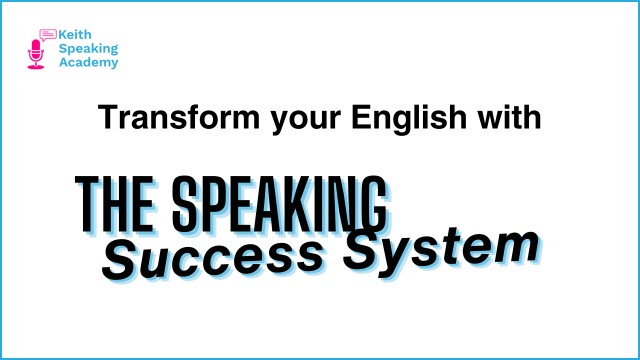
I suggest using what I call the Speaking Success System, which is at the heart of all my teaching and courses:
- Discover: Learn the grammar rule through context.
- Practise: Use the rule in speaking exercises.
- Review: Reflect on your usage and make improvements.
For example, consider the IELTS question: “Do you usually cook at home?”
Sample answer:
Yes, I cook most evenings after work. I usually cook Spanish dishes because I like them. Right now, I am learning how to cook Italian food.
Notice the use of present simple for routines (“I cook,” “I usually cook”) and present continuous for actions happening now (“I am learning”).
Now practise making and speaking out your own answer, focusing on using the present simple and present continuous.
You can repeat for all questions using this structure “do you usually ______?”
3. Speak Slowly
When practicing longer responses or having conversations, speak more slowly. This gives you time to think and focus on using grammar correctly.
Many students think fluency is about speed, but it’s not. Slow down to improve accuracy.
4. Record Yourself and Check
If you don’t have a teacher to correct you, you need to correct yourself. Record yourself speaking—audio or video—and then listen back.
Focus on the one grammar rule you’re practising. Are you using it correctly? If not, identify the mistakes and work on them.

5. Use AI to Review
Use AI tools to create stories, podcasts, or dialogues that incorporate the grammar rule you’re focusing on.
For example, ask AI to create a short story using five examples of the present and present continuous tense. Then, read or listen to the story and identify the grammar usage.
AI can provide unlimited materials to practise and review grammar in different contexts.
6. Do Some Writing
Writing reinforces the language you’ve practiced speaking. After speaking exercises, write about the same topic using the grammar rule you’re focusing on.
This helps solidify your understanding and usage of the grammar point.
Final Thoughts
Remember, to improve your spoken English grammar:
- Focus on one rule at a time.
- Practise using the Speaking Success System.
- Speak slowly to enhance accuracy.
- Record yourself and check for mistakes.
- Use AI tools to review grammar in context.
- Reinforce learning through writing.
Give this framework a try, and you’ll be on your way to speaking English with greater confidence and fewer grammar mistakes.
Download Your Free IELTS Speaking PDF
To help you further, I’ve prepared a free IELTS Speaking PDF that summarises this lesson and provides additional practice materials. You can download it at the top of the page.
Happy learning!
Frequently Asked Questions
Use the 6-Step Framework:
- Focus on one grammar rule at a time.
- Follow the Speaking Success System: Discover → Practise → Review.
- Speak slowly—accuracy matters more than speed.
- Record and listen to yourself to spot errors.
- Use AI to generate materials to practise and review with.
- Write about what you’ve practiced to reinforce your learning.
Trying to correct every grammatical mistake all at once can feel overwhelming. Concentrating on one rule—like distinguishing between present simple and present continuous—helps you make steady progress.
Ask AI to create stories, dialogues, or podcasts using a specific grammatical structure. Read or listen carefully to see how the rule is used in context—then mimic or reproduce it in your own speech.
Recording your speech gives you the chance to listen back and catch mistakes in real time. It also slows down your delivery, giving you more space to focus on accuracy instead of rushing.
Improve your Speaking Skills with this Free Course
Crack IELTS Speaking Part 1
Learn to Speak with Confidence in Part 1 of Your IELTS Test!
⭐️⭐️⭐️⭐️⭐️
‘It’s such a great course. I’ve learned so many usages for speaking part 1.’
Zu Htet