IELTS Speaking Lesson about Being Busy

👇 Take this lesson with you! 👇

Table of Contents

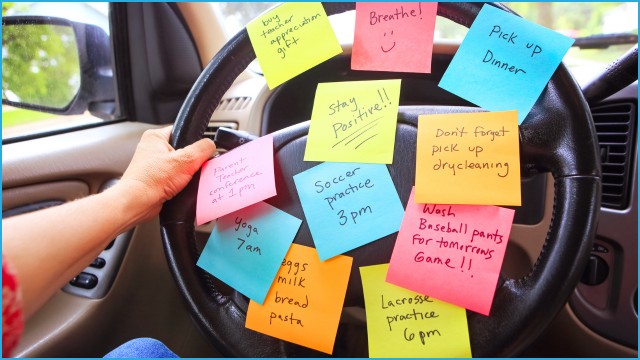
Nowadays, it seems we are all busier than ever. Is this a good or bad thing? This topic of being busy is a fairly new one in IELTS Speaking. Here are some great ideas and useful vocabulary, phrases and idioms you can use to talk confidently on this topic.

IELTS Speaking Vocabulary: Being Busy

Hectic (adj.) /ˈhek.tɪk/ = very busy

Something is hectic (=very busy)

Work is hectic

My day is hectic

My life is hectic

To have a hectic schedule

Things are hectic at work this week; two people are off sick.

I have such a hectic schedule; I can hardly find time for lunch.

hectic

Overloaded (adj.) = carrying too big a load, having too much (…work, pressure)

To be overloaded with work

I am overloaded with work, I need some help.

A rush (n.)  /rʌʃ/

= 1) a situation where you need to move quickly

= 2) A sudden quick movement

Similar words

  • A hurry
  • To be in a rush
  • To be in no rush

We are always in a rush in the mornings

I’m in no rush to finish my dinner

I’m not in a rush to finish my dinner

To rush (v.) = to do something quickly 

Collocations

  • To rush around / about
  • To rush to (preposition)
  • To rush to do something (infinitive)
  • To rush someone / something

I was rushing around like a headless chicken

I had to rush to the shops

Don’t rush to finish, take your time

Don’t rush me!

You shouldn’t rush your homework

Advantages and Disadvantages of Being Busy

What are the advantages of being busy?

  • You can get more work done
  • Improved productivity
  • A strong feeling of satisfaction
  • No time to think or be distracted by negative thoughts

What are the advantages of being able to take your time?

  • You can do things at your own pace
  • Produce better quality work
  • You’ll avoid mistakes
  • You can pay more attention to your work and do it better

Here are positive and negative ways of talking about doing things quickly.

Positive

  • To do something efficiently
  • To do it lightning-fast
  • To do something in a flash
  • To do things in a timely manner
  • To be agile (=to move quickly, be flexible)
  • To be productive = (to do it efficiently)

Negative

  • To rush (through) something
  • To hurry something
  • To do something in a hurry  / rush
  • To do things hastily

IELTS Speaking Idioms: BEING BUSY

Being busy - idioms

1. To be rushed off your feet = Extremely busy or overwhelmed with tasks.

I was rushed off my feet preparing for the presentation yesterday

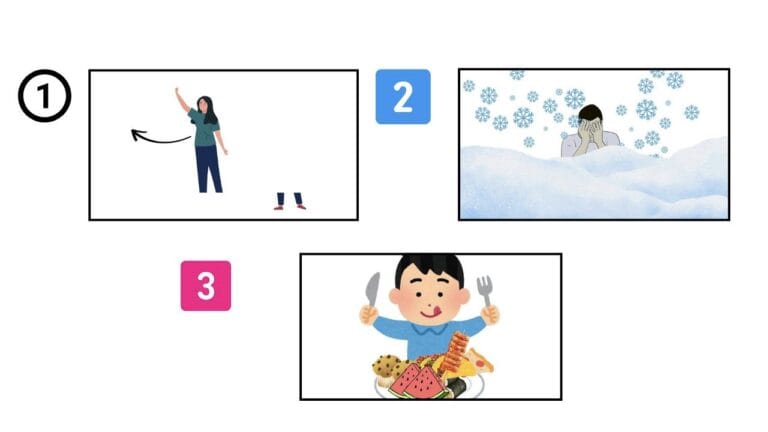
2. To be snowed under = Having too much work to deal with.

I’m snowed under with emails—I haven’t even had lunch yet!

3. To have a lot on your plate = Have many responsibilities or tasks to manage.

Between work, kids, and studying, Ive got a lot on my plate.

4. To be swamped (with something) = Overwhelmed or flooded with work or responsibilities.

Shes swamped with client meetings all week.

IELTS Speaking Sample Answer

Describe a time you had to finish something quickly

You should say,

  • What it was
  • When it was
  • Why you had to do it quickly   
IELTS Speaking Sample Answe Being Busy

Well, there was this one time when I had to do an assignment.

I had to hand in (=give or submit) an assignment and I’d almost run out of time (=to have no time left) to finish it, so I had to really get it done (= do it, but emphasises quickly and often with external pressure) quite quickly.

This was when I was working full time and I was doing a master’s degree part time, so I was balancing work with study.

And not only was I swamped [under] with work, but also had to meet the submission deadline for this assignment.

And it was a really important assignment because it counted towards the final grade of the whole degree. so what did I do?

Well, I just made a plan for the whole week coming up to the deadline. I remember going out every evening and sitting in a coffee bar and studying.

I basically pulled out all the stops [=to do everything possible to succeed] to make sure I had the time to do it. I was literally burning the candle at both ends. (=working a lot, from late at night to early in the morning)

It was a bit of a strain on (= pressure on…) myself and my family, but in the end, yeah, I pulled it off (= I succeeded)

I managed to do the assignment effectively and I did a good job. And although I was rushing a bit, I managed to keep it a good level of quality.

And in the end, I got the grade that I wanted. So, yes, I was pleased with that.

Practise and Review With a Story

Read and listen to the story below to review the language from this lesson.

A Busy Life

In a small, lively town, there was a journalist named Sam. She loved her job because it was very busy and exciting. She loved the adrenaline rush (=feeling of excitement) of always chasing a new story. She was agile and good at her job.

One day, Sam got a mysterious letter without a name on it. It talked about a big secret in the town, a possible cover-up (=hiding something bad you have done). Sam wanted to find out more because it could be the biggest story of her career.

She started to work on this new story and soon found herself with a very hectic schedule. She had to talk to many people and look at lots of information. Because of this, Sam was rushed off her feet. She had to do her regular work and also follow the clues from the letter. 

Her days were hectic, and she felt swamped with work. Sam was doing too much and feeling overloaded. It was all starting to take its toll (= to have a serious and bad effect) If she didn’t slow down, she’d end up in hospital. 

To avoid hospital, Sam knew she needed to be smart to finish her work. She decided to focus on the most important clues and asked other journalists to help her with other stories. This helped her to not rush and to be careful with her big story.

After working hard, Sam found the evidence she needed. She did everything lightning-fast but well, and soon she had all the facts to tell everyone the truth.

Sam’s story was a big success. It showed a big secret that was hidden in the town, and people were very thankful for her work.

The town was in awe of the young journalist’s tenacity and skill, and she went on to become a ‘rising star’ in the newspaper where she worked.

Pronunciation Files For Vocabulary From My Best Live Lessons

Use Words EASILY in English Conversations!

More IELTS Speaking Free Lessons

If you liked this lesson about music in IELTS Speaking, leave a comment below!

There are more lessons you can follow in the links below too.

FAMILY BUSINESS in IELTS Speaking. Essential vocabulary and idioms to talk about Family Business.

FOOD in IELTS Speaking. Idioms and vocabulary to learn how to talk about food.

SINGING in IELTS Speaking. Vocabulary and collocations to talk about singing.

POLITENESS in IELTS Speaking. Useful collocations and vocabulary to help you discuss about politeness.