👇 Take this lesson with you! 👇
Table of Contents
Do you want to improve your English pronunciation?
There’s a simple trick that many native speakers use – and it can help you sound more natural and fluent: squeezed pronunciation.
Let’s explore what it is, how it works, and 12 everyday examples to help you speak more like a native English speaker.
What Is Squeezed Pronunciation?
Have you ever listened to a native English speaker and thought,
Wait… what did they just say?
Then you check the subtitles or transcript… and realise they skipped half the sounds?!
That’s squeezed pronunciation.
Take this example:
That’s interesting
You might hear it as:
That’s intresting
What happened to the middle syllable? It got squeezed out.
In English, we often drop or merge sounds in fast speech. It’s completely normal – and helps conversations flow smoothly.
We’re not doing it to confuse learners – it’s just how spoken English really works.

Why It Matters for English Learners
Learning to recognise squeezed pronunciation will:
✅ Improve your listening skills
✅ Help you understand native speakers in real-life situations
✅ Make your own speech sound more natural and fluent
And the good news? You don’t need to learn complex rules.
Start by focusing on a few high-frequency words and train your ears and mouth to handle them.
12 Common English Words with Squeezed Pronunciation
| Word | IPA (pronunciation) | Squeezed Form |
|---|---|---|
| Chocolate | /ˈtʃɒk.lət/ | “Chok-lit” |
| Memory | /ˈmem.ri/ | “Mem-ree” |
| Favourite | /ˈfeɪ.vər.ɪt/ | “Fave-rit” |
| Comfortable | /ˈkʌmf.tə.bəl/ | “Comf-tuh-bul” or “Cumf-tbl” |
| Vegetable | /ˈvedʒ.tə.bəl/ | “Veg-tuh-bul” or “Vedge-tbl” |
| Different | /ˈdɪf.rənt/ | “Diff-rent” |
| Business | /ˈbɪz.nəs/ | “Biz-nis” |
| Library | /ˈlaɪ.brər.i/ or /ˈlaɪ.bri/ | “Lie-bree” |
| Wednesday | /ˈwenz.deɪ/ | “Wenz-day” |
| Literature | /ˈlɪt.rə.tʃə/ | “Lit-richer” |
| Actually | /ˈæk.tʃu.ə.li/ or /ˈæk.tʃə.li/ | “Ack-chuh-lee” |
| Restaurant | /ˈres.trɒnt/ or /ˈres.trənt/ | “Res-tront” or “Rest-rant” |
How to Practise Squeezed Pronunciation
Here’s a quick method to get started:
- Listen to how native speakers say these words in videos, songs, or podcasts.
- Repeat the word out loud using the squeezed version.
- Record yourself and compare.
- Use the words in sentences or short dialogues.
For example:
This restaurant is my new favourite.
I don’t have a good memory for dates.
Actually, I’m free on Wednesday.

Frequently Asked Questions
Squeezed pronunciation is when native English speakers drop or reduce sounds in words during fast or natural speech. For example, “interesting” is often pronounced as “intresting.”
It helps improve your listening and speaking skills by making you understand how English is spoken in real life and sound more fluent when you speak.
Yes, most native speakers naturally use squeezed pronunciation in informal or fast speech. It's a common part of spoken English.
Start with high-frequency words, listen to native speakers, repeat after them, and record yourself. Practising short sentences also helps.
Yes! It’s more important to be clear. But understanding it will help your listening and help you sound more natural when you're ready.
Definitely. While clarity is key in IELTS, understanding and using natural pronunciation patterns like this can help you sound more fluent and confident.
Final Tip
You don’t need to squeeze every word to sound more native – but learning to recognise and use this kind of pronunciation can take your English to the next level.
And remember: sounding fluent is not about speaking fast – it’s about speaking naturally.
Ready to Speak English Confidently?
Improve your speaking skills with this FREE IELTS Speaking course
What you’ll learn
- How to improve your part 1 answers
- Awesome phrases to impress the examiner
- Essential grammar to make your answers more accurate
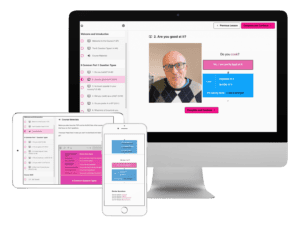
Sign up now and start practicing immediately – it’s completely free!