Student Overview
- Starting level: Band 6.5
- Target: Band 7.5 (required for UK veterinary registration)
- Biggest challenge: Writing timing issues, speaking under pressure, demotivation, and inconsistency after setbacks
- What helped most: Daily writing practice, structured IELTS courses (Gold Course + Fluent Grammar + Writing course), speaking practice with a native speaker, and breakout room speaking practice
- Result: Band 7.5 in IELTS Speaking (achieved after 3 attempts over ~8 months of preparation)
Watch Merche share her experience in her own words:
The Story
The Problem
Before preparing successfully for IELTS, Merche felt under pressure to achieve a high score so she could advance her professional career as a veterinarian in the UK. Although she was motivated, she struggled with writing under time pressure and often could not complete tasks within the required time.
In speaking, she also faced difficulty practising alone and sometimes felt demotivated during her preparation journey.
What Wasn’t Working
At the beginning, Merche’s preparation lacked consistency in exam timing skills. She wrote many essays but still struggled to finish Writing Task 1 and Task 2 within one hour.
In speaking, practising alone by recording herself felt uncomfortable and frustrating, which made it harder to improve fluency in a natural way.
What Changed
Merche made a major shift in her preparation strategy by combining structured study with daily practice:
- She wrote essays every single day (Task 1 and Task 2)
- She followed multiple structured courses, including the Gold Course and writing-focused lessons
- She practised speaking daily with a native English-speaking friend
- She used the IELTS Speaking breakout rooms for regular practice sessions
- She exposed herself to consistent English communication with others rather than isolated study
This combination of input (courses) and output (daily speaking and writing) became the key to her improvement.

The Result
After approximately 8 months of full-time preparation and three IELTS attempts, Merche finally achieved her required score:
- Overall required score achieved
- Band 7.5 in IELTS Speaking (improved from 6.5)
- Higher confidence and stronger communication skills
She was extremely relieved and happy, especially after previously feeling demotivated and uncertain about her progress.
Useful English from this story
- “Stay motivated” → continue working even when it’s difficult
- “Perseverant / be patient” → keep trying over time
- “Put something into practice” → use knowledge in real situations
- “Build a habit” → do something regularly until it becomes automatic
- “Ups and downs” → emotional and performance fluctuations
- “Be kind to yourself” → avoid excessive self-criticism
What you can learn from Merche
- Consistency is more important than short bursts of intense study
- Writing timing must be trained daily for IELTS success
- Speaking improves fastest through real communication with people
- Motivation will go up and down, but habits keep you moving forward
- Combining structured courses with real practice gives the best results

Speaker 1:
Staying motivated whilst preparing for IELTS is not easy. So how did Merci, my student from the Gold Course, manage to do it and improve her speaking score from 6.5 up to 7.5? Let’s find out!
Hello, this is Keith from the Keith Speaking Academy, and welcome. Today I’m very excited because I’ve got a great interview for you with one of my students, Merche from Spain. She lives in Bilbao, which is about an hour away from where I am, although we’ve only ever met online.
Merche needed IELTS in order to work as a vet in the UK, where she had been offered a job. She first took the test in March but didn’t get the score she needed. After that, she focused seriously on preparation for several months, studying every day and using different courses including the Gold Course, my Fluent Grammar course, and Eli’s Writing course.
A few weeks ago, she finally got the score she needed, including a 7.5 in IELTS Speaking, after previously getting a 6.5. In this interview, she shares her journey, the challenges she faced, and how she overcame them, along with useful advice for students in similar situations.
Let’s dive into the interview.
Speaker 2:
Hello. Hi. Very pleased to be with you.
Speaker 1:
Great to see you. Can you tell us a little about yourself—where you’re from and what you do?
Speaker 2:
I’m from the north of Spain, from the Basque Country, near Bilbao, in a small town called San Fuentes. I’m currently living in my parents’ house.
Speaker 1:
Are you working or studying at the moment?
Speaker 2:
Right now I’m not working. I’ve been preparing for IELTS for about eight months full-time because I had a job offer in the UK. I will probably start working there in September.
Speaker 1:
What will you be doing in the UK?
Speaker 2:
I am a veterinarian. I decided to restart my professional career in the UK because a friend told me about the good work-life balance and career opportunities. I want to specialise in neurology.
Speaker 1:
So you needed IELTS for professional registration?
Speaker 2:
Yes. To register with the Royal College of Veterinary Surgeons, I needed an overall 7 in IELTS, with at least 6.5 in one skill and 7 in the others.
Speaker 1:
When did you take the test and what happened?
Speaker 2:
I took the test three times. The first two were in March, very close together—just 10 days apart. I was only 0.5 away from my target in speaking and writing, so I tried again quickly but got the same result.
After that, I stopped, became more patient, and kept practising every day. Four months later, in July, I took the test again and finally got the score I needed—and even higher. I was very happy and relieved.
Speaker 1:
That’s fantastic. You seem like a very strong communicator, but IELTS is very strict.
Speaker 2:
Yes. I tried to be very objective. I thought I couldn’t get a 7 in writing, but I still needed 6.5, so I kept trying. When I finally saw a 7 in writing, I was surprised. We always think we can do more.
Speaker 1:
What were your biggest challenges during preparation?
Speaker 2:
Writing was the hardest. I could never finish Task 1 and Task 2 in time. My essays usually took 1 hour or more. Timing was my biggest problem.
Speaker 1:
What about speaking?
Speaker 2:
Speaking was also difficult because I didn’t like practising alone. Recording myself felt frustrating. However, I was lucky to have an English friend who practised with me almost every day for 2–3 hours.
I also used the Gold Course and the speaking breakout rooms. That combination was essential.
Speaker 1:
In what way did the course help you?
Speaker 2:
It gave me everything I needed—topics, vocabulary, grammar structures, and practice opportunities. I combined that with daily speaking practice and it made a big difference.
For writing, I also watched Eli’s videos, which helped me understand structure.
Speaker 1:
How did you stay motivated?
Speaker 2:
Even when I felt demotivated, I still wrote every day. It became a habit. You must accept that motivation goes up and down, but consistency is key.
Speaker 1:
How do you feel now that it’s finished?
Speaker 2:
Very relaxed. A bit nervous about the next steps, but mostly relieved.
Speaker 1:
What are your next steps?
Speaker 2:
I’m going through registration, which takes several weeks. I will start working in Reading in September. Right now, I’m looking for accommodation.
Speaker 1:
Do you feel more confident in English now?
Speaker 2:
Yes, much more confident. Speaking every day really improved my fluency.
Speaker 1:
Any final advice for students?
Speaker 2:
Don’t lose hope. You will get there. Be persistent and accept ups and downs. Improve a little every day and make English part of your daily life. Be kind to yourself.
Speaker 1 (closing):
Thank you so much for sharing your journey. I’m sure it will inspire many students. Best of luck in the UK, and stay in touch.
Speaker 2:
Thank you very much. Bye.
Speaker 1 (final):
Thank you to Merche for sharing her story. I hope this inspires you. Keep studying, stay motivated, and I’ll see you in the next video.
FAQs
It depends, but most students will improve their speaking skills significantly within 3–6 months with consistent practice.
Because of strict timing and task requirements. Daily practice and a clear understanding of the task requirement and marking criteria, are essential.
Yes, practicing alone has some great advantages; low stress, complete control of content and timing so you can focus on areas you need to. However, speaking with real people builds fluency and confidence because it requires you to listen and process ideas, react quickly, and also get used to being outside your comfort zone.
Daily speaking practice, structured learning, and real conversation practice with others.
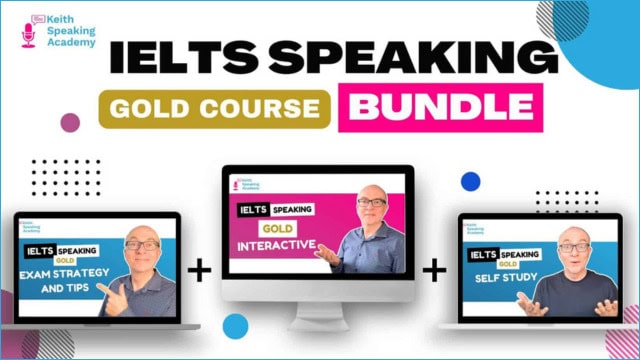
If you want to build your confidence in speaking like Merche, you can check out my course here:
More Student Success Stories
- Jason’s Story – See how Jason improved his IELTS Speaking score from Band 6.5 to Band 7.5 by reducing overthinking, practising consistently, and using structured speaking techniques.
- Olena’s Story – Discover how Olena achieved Band 8.5 in IELTS Speaking through flexible strategies, real practice, and learning how to answer naturally without memorising responses.