Student Overview
- Starting level: Band 7.5
- Target: Band 8
- Biggest challenges: Handling stress, confusion about band descriptors and knowing what “good English” actually means.
- What helped most: Daily speaking with a partner + clear strategies and feedback
- Result: Band 8 in 2 months
The Story
The Problem
Before preparing seriously, Junjie felt confused about IELTS Speaking.
He found the test “daunting” and struggled to understand what examiners really wanted. The band descriptors felt vague, and he didn’t know what “good English” actually meant in speaking.
He also mentioned that there was a lot of mixed advice online, which made things even more confusing.
What Wasn’t Working
At first, Junjie lacked a clear direction.
He didn’t fully understand how to use the band descriptors in a practical way, and like many students, he found it difficult to know how to deliver answers naturally in the test.
Generic advice didn’t help him move beyond Band 7.5, and he needed something more specific and practical to break through that level.
What Changed
Things started to improve when Junjie focused on three key areas:
- Understanding the test clearly
Simplified band descriptors, model answers, and exam techniques helped him finally understand what was required. - Speaking regularly with a partner
He found a speaking buddy and practised every day, which reduced stress and built confidence. - Adapting learning to his own style
Instead of copying others, he adjusted strategies to suit his way of speaking and learning.
He also focused on using natural English, practising language chunks from the IELTS Speaking Gold course, and getting helpful feedback through mock tests.

The Result
After consistent practice and clearer direction, Junjie improved from Band 7.5 to Band 8 in just two months.
He felt more confident, more natural when speaking, and better able to communicate clearly with the examiner.
Useful English from this story
- “It’s a daunting test” → something that feels difficult or intimidating
- “The marking criteria is very vague” → not clear or specific
- “Break through the Band 7.5 ceiling” → move past a level where progress feels stuck
- “There is no shortcut” → success requires time and effort
- “Speak as naturally as you can” → communicate in a relaxed, real way
Key Lessons
What you can learn from Junjie:
- Clear understanding of the test is essential
- Daily speaking practice makes a big difference
- A speaking partner can reduce stress and improve confidence
- Natural English is more effective than “fancy” language
- Learn to use chunks effectively and with correct intonation
- Feedback helps you move from Band 7.5 to Band 8
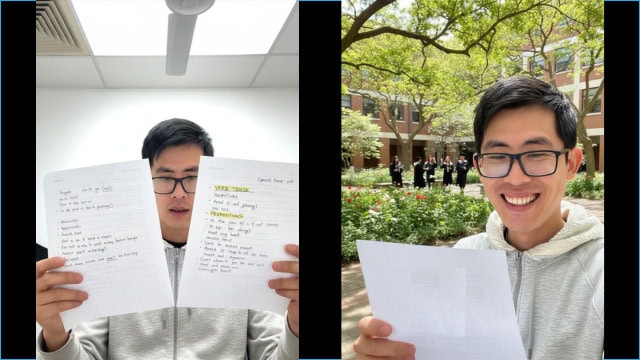
Speaker 1: Hello, Junjie. Hi, how are you?
Speaker 2: I’m good. How about yourself?
Speaker 1: I’m very well, thank you. I’m looking forward to talking to you and discussing the topic of IELTS Speaking and your journey today.
Speaker 2: Thank you for having me.
Speaker 1: Not at all, it’s a pleasure. So let’s begin. Maybe you could give us a bit of background about yourself—who you are, where you’re from, and what you’re doing.
Speaker 2: My name is Junjie. I’m originally from China, and now I live and work in Australia as a teacher. The reason I needed to take the IELTS test was to get my qualification registration, and part of that was also for migration. I’m very happy I got a Band 8 in speaking. I’m really happy with my result, to be honest.
Speaker 1: Fantastic.
Speaker 1: Let me ask you, as you were preparing for IELTS, and in particular IELTS Speaking, what were the biggest challenges and difficulties for you?
Speaker 2: I think each stage of IELTS preparation has different challenges. If I had to say, I would say it was more about emotional experiences. In the beginning, I was very confused about how to prepare for the IELTS test, especially speaking, because it’s quite a daunting test.
If I’m being honest, you hear lots of different voices saying you might not get the result you need, especially if you’re aiming high. Also, the marking criteria is very vague, and it’s hard to understand. That’s one of the major challenges because there’s nobody really there to guide you, and you have to work through everything yourself to get the score you need.
Another challenge is the practical approach to speaking. As I mentioned, the marking criteria is confusing, and it’s hard to know what counts as good speaking. Different examiners may have different perspectives, and it feels like everything can be right or wrong. It’s really hard to know.
Speaker 1: When you say “good speaking,” do you mean what makes a good answer or what makes good English?
Speaker 2: More specifically, I mean delivering a good level of English. It’s not just about answering the question well, but what “good English” actually means. It’s a very broad concept, and I think many people, including myself, struggle with that.
Speaker 1: I agree. Speaking is much more complex than writing, and there are fewer fixed rules. So how did you overcome those challenges?
Speaker 2: I believed I could speak well because I had spoken to native speakers quite a lot before. That gave me confidence.
Also, another reason I wanted to take IELTS is that I would like to become an IELTS teacher in the future, especially for speaking. That’s the area I feel most confident in, and I hope to have my own course one day to help students from different backgrounds.
Speaker 1: That’s great. You mentioned the band descriptors being confusing. What did you do about that?
Speaker 2: It took me a while to gradually understand them. I started to understand more after I joined the GOLD course because everything was explained clearly—test techniques, model answers, and simplified band descriptors.
That made everything easier for me. But the most important thing is not just understanding the band descriptors, it’s how you refine your language and reach the level you need so you can speak confidently with the examiner.
Band descriptors are helpful, but what really matters is how you perform on test day and how naturally you can apply your language. Everyone has their own style, but for me, the model answers and exam techniques were very helpful. I also adapted them to suit my own learning style.
Speaker 1: That’s so important—everyone learns differently. How did you handle the stress of IELTS?
Speaker 2: I think it’s very important to have a study buddy. I met a lot of people from the GOLD course and joined the practice sessions regularly. Luckily, I found a speaking buddy, and we practised speaking every day.
Sometimes we helped each other with writing and other modules as well. Having a speaking buddy is very important because they are part of your journey. They understand your struggles and your strengths.
That experience made me feel much more comfortable during my IELTS journey. In real life, not everyone understands the stress of the IELTS test, but someone going through the same experience does.
Speaker 1: That human connection really helps.
Speaker 2: Yes, exactly. And also having helpful resources is important because your mind is always looking for answers. Once your practice is on track, your stress naturally reduces.
Speaker 1: What was your original speaking score?
Speaker 2: My original score was Band 7.5. Going from Band 7.5 to Band 8 involved some struggles, especially dealing with generic advice. But the most important thing was getting helpful feedback to break through that Band 7.5 ceiling.
It didn’t take very long—about two months to reach Band 8.
Speaker 1: That’s great. What advice would you give to students preparing now?
Speaker 2: I would recommend joining the GOLD course because it covers almost everything. For Band 7 or 7.5, it’s usually enough. For Band 8+, students may also need something like Fluent Grammar, because Band 8 requires consistent pronunciation, intonation, and clarity.
Another important tip is to get a speaking buddy. That’s very helpful, especially if they can give you feedback.
There is no shortcut, but you should try to speak English as much as possible. You can also learn language chunks and practise making your own sentences. That helps you build more natural, informal language.
On test day, use vocabulary that you know well. You don’t need to show off with complex words. It’s more important to sound natural, like you’re having a real conversation.
Also, doing one or two mock tests before the exam is very useful. A teacher can give you helpful feedback so you know what to improve before the test.
Speaker 1: I agree, especially at Band 8 level, feedback is very important.
Speaker 2: Yes. And I think it’s also important to find a teacher who matches your style. Some teachers focus too much on test mode, which made me feel less natural.
But when you feel relaxed, you can speak more naturally, and that helps a lot.
If you build a good speaking habit, you will naturally perform well in the exam.
Speaker 1: Exactly.
Speaker 2: I think your courses are very helpful. The GOLD course helps with ideas—what to say—and Fluent Grammar helps with how to say it, including grammar and pronunciation.
Speaker 1: Great. Thank you so much, Junjie, for sharing your journey and advice. I’m sure it will help many students.
Speaker 2: Thank you so much. It was lovely to talk to you.
Speaker 1: You too. Take care.
Speaker 2: Bye.
FAQs
Yes, it is definitely possible. As Junjie’s experience shows, moving from Band 7.5 to Band 8 often requires focused improvement rather than big changes.
At this level, the key is:
- More precise and natural language
- Consistent pronunciation and intonation
- Clear communication without hesitation
With regular speaking practice and targeted feedback, many students can achieve this over time.
One of the most effective methods is to practise speaking with a partner regularly.
Junjie improved by:
- Speaking every day with a study buddy
- Practising real conversations (not memorised answers)
- Giving and receiving feedback
This kind of practice helps you become more natural and confident, which is essential for a high band score.
Yes, and No. You need a wide range of vocabulary that you can use flexibly to convey precise meaning. This includes use of idiomatic language. However, you won’t get a Band 8 just because you used a few fancy words.
As Junjie advises:
- Use vocabulary you are confident with
- Focus on clarity and natural communication
- Avoid trying to impress the examiner with difficult words
Examiners are looking for natural spoken English, not complex formal or academic vocabulary.
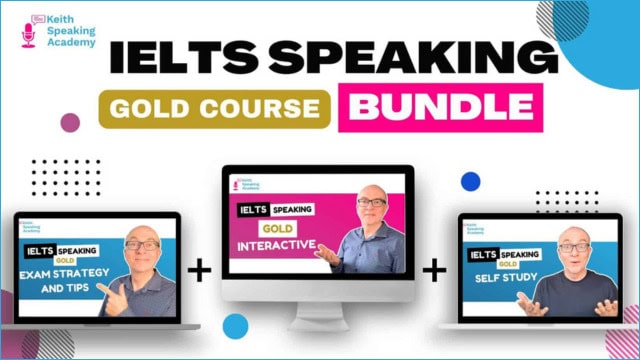
If you want to build your confidence in speaking like Junjie, you can check out my course here:
More Student Success Stories
- Stefanus’s Story – Learn how Stefanus improved his IELTS Speaking score from Band 4.5 to Band 6.5 through consistent practice, structured learning, and long-term commitment.
- Merche’s Story – Learn how Merche stayed consistent through setbacks and improved from Band 6.5 to Band 7.5 in IELTS Speaking with patience, persistence, and structured practice.