👇 Take this lesson with you! 👇
If you’re reading this, you are most likely preparing for the IELTS Speaking test in 2025. As you may know, new topics appear in IELTS Speaking every 4 months.
So, to help you prepare for a high score, here you’ll find some of the most popular topics right now. In addition, I have given you some essential collocations and examples you can use in your answers.
Table of Contents
Topic 1: Travel and Transport
🚘Transport Vocabulary
Forms / means / modes of transport — ways of travelling from one place to another.
There are many means of transport such as buses and trains.
To travel by car / by plane / by train / on foot — describe how you move from place to place.
I prefer to travel by train because it’s more comfortable.
Public transport (UK) / public transportation (US) — transport used by everyone, like buses or the metro.
I prefer public transport as it helps reduce pollution.
Private transport (UK) / private transportation (US) — your own vehicle such as a car or motorbike.
Private transport is convenient but quite expensive.
Global warming — the rise in Earth’s temperature caused by pollution.
Cars contribute a lot to global warming.
Carbon footprint — the amount of carbon dioxide you produce.
Flying increases your carbon footprint.
To offset your carbon footprint — to reduce or balance the pollution you cause.
You can offset your carbon footprint by planting trees.
Sustainable vehicles — eco-friendly forms of transport.
Electric bikes are a good example of sustainable vehicles.
Zero-emission vehicles — cars that produce no pollution.
Zero-emission vehicles are becoming more and more common.
Driverless cars — cars controlled by computers rather than humans.
Driverless cars will certainly become more popular in the future.
🚦Travel to Work
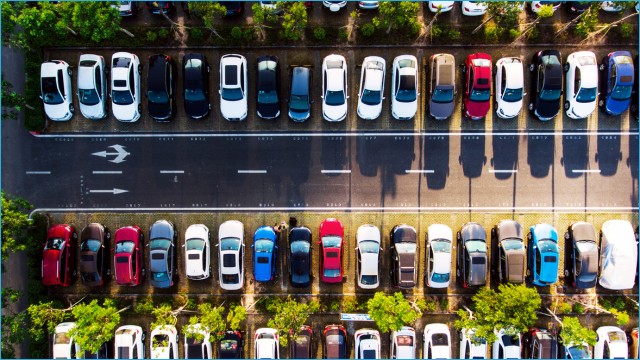
Daily commute — your regular journey to work or school.
My daily commute takes about thirty minutes.
Rush hour / peak hours — the busiest travel times of the day.
Traffic is awful during rush hour.
Traffic jam — a long line of cars not moving.
I was stuck in a traffic jam for over an hour.
To be stuck in traffic — unable to move because of heavy traffic.
I’m sorry I’m late, I was stuck in traffic on the way here.
Bumper to bumper — cars very close together in traffic.
Traffic in the rush hour is often bumper to bumper.
Air pollution — dirty air caused by vehicles or factories.
Air pollution is a serious problem in big cities.
Exhaust fumes — gas from car engines.
Exhaust fumes damage the environment.
🏖️ Holidays and Tourism
To go on a trip — to travel somewhere for a short time.
We went on a trip to Italy last year.
To book a holiday / hotel — to reserve your travel or accommodation.
I booked a hotel online yesterday.
A package holiday — a holiday organised by a travel company.
I prefer package holidays because everything is taken care of.
To see the sights / go sightseeing — to visit famous places.
We spent the weekend sightseeing in Paris.
To stay in a hotel — to sleep in a hotel.
We stayed in a lovely hotel near the beach.
Holiday destination — a popular place to visit.
Bali is a famous holiday destination.
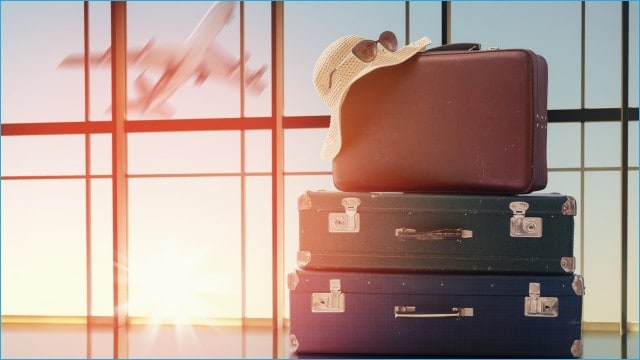
To take a flight / long-haul flight — to fly to another place far away.
I took a long-haul flight to Australia.
To suffer from jet lag — to feel tired after a long flight.
I usually suffer from jet lag when I fly to Asia.
Mass tourism — large numbers of tourists visiting one place.
Mass tourism can harm local culture.
Eco-tourism — responsible travel that protects nature.
Eco-tourism supports local communities.
Domestic travel — travel within your own country.
Domestic travel became more popular during the lockdowns.
Budget travel / to travel on a budget — to travel cheaply.
Students often travel on a budget.
To go backpacking — to travel with a backpack, often on a budget.
Many young people go backpacking after university.
Affordable travel options — cheap and accessible ways to travel.
Low-cost airlines offer affordable travel options.
Topic 2: Hobbies and Free Time
💡 Starting or Talking About Hobbies
To pursue a hobby — to do something regularly for pleasure.
I don’t pursue any hobbies at the moment, I’m just too busy.
To take up a hobby — to start a new activity.
I took up photography last year.
To develop an interest in (something) — to begin liking it.
I developed an interest in cooking during after I bought this new recipe book.
Free time / spare time / leisure time — time when you’re not working.
I like to read in my spare time.
🏕️ Types of Hobbies
Outdoor activities — hobbies done outside.
Hiking is my favourite outdoor activity.
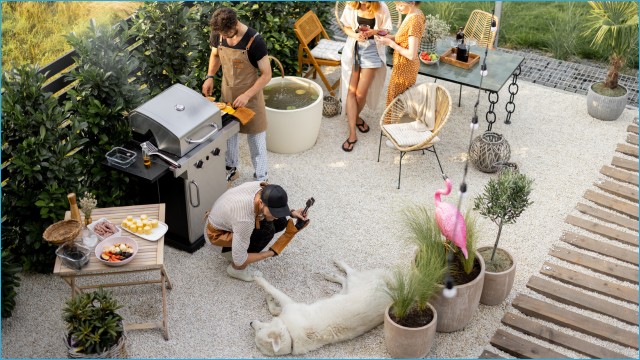
Social hobbies — activities done with other people.
I enjoy social hobbies like dancing.
Digital hobbies — online or computer-based hobbies.
Gaming is a popular digital hobby in my country.
To dabble in (something) — to try something casually, often for a short time.
I sometimes dabble in painting.
To do some volunteering — to help others for free.
I do some volunteering at the weekends.
🏋️♂️ Sports and Fitness
To get in shape — to improve physical fitness.
I’m jogging to get in shape.
To lose weight – to reduce your weight.
I went on a diet to lose some weight.
To build muscle – to do exercise to become stronger.
I started lifting weights in order to build muscle.
To train regularly— to exercise often.
I train regularly to stay healthy.
To join a club — to become a member of a sports or hobby group.
I joined a tennis club last month.

🌿 Reasons for Hobbies
A stress buster — something that helps reduce stress.
Yoga is a great stress buster.
A form of relaxation / a way to kick back / disconnect — ways to rest and relax.
Reading is my favourite form of relaxation.
A creative outlet — a way to express creativity.
Writing gives me a creative outlet.
To find pleasure in (doing something) — to enjoy it.
I find pleasure in gardening.
To get back to nature — to spend time outdoors close to nature.
Camping helps me get back to nature.
To be at a loose end — to have nothing to do.
After retirement I was at a loose end, so I took up fishing.
Topic 3: Family and Friends
🏠 Family
Immediate family — your closest relatives (parents, siblings, children).
I just live with my immediate family.
Extended family — relatives such as cousins or aunts.
I have a large extended family.
A close-knit family — a family with strong relationships.
We’re a close-knit family and always try to support each other.
Family gatherings — events when the family meets.
We have family gatherings every Christmas.
To spend quality time (with family) — to enjoy meaningful time together.
I spend quality time with my parents most weekends.
Blood is thicker than water — family comes first.
I believe blood is thicker than water.
A generation gap — differences between younger and older people.
There’s a generation gap between me and my dad.
🧑🤝🧑 Friends
To make friends / form a friendship — to start a relationship with someone.
It’s easy to make friends at university.
A circle of friends — a group of friends.
I have a small circle of friends I trust.
To have a lot in common — to share interests or opinions.
We have a lot in common, including watching films.
To keep in touch / stay in contact — to communicate regularly.
I keep in touch with old classmates online.
To be on the same wavelength — to think alike.
My best friend and I are on the same wavelength when it comes to politics.
To hang out / catch up with friends — to spend time or share news.
I love catching up with friends over coffee.
❤️ Emotional Relationships
To go out with (someone) — to be in a romantic relationship.
I’m going out with someone I met at work.
Online dating — meeting people through apps or websites.
Online dating has become more and more common nowadays.
A long-distance relationship — a relationship between people living far apart.
It’s not easy having a long-distance relationship.
To fall out with / make up with (someone) — to argue / to reconcile.
We fell out after the argument, but made up later that day.
To have ups and downs — to experience good and bad times.
Every couple has its ups and downs.
To count on (someone) — to rely on someone.
I can always count on my best friend.
Final Tips to Learn Vocabulary
Don’t just memorise words — use them in real sentences. Practise aloud, create your own examples, and include them naturally in your IELTS answers.
You can learn how inside my IELTS Speaking Gold Course — a complete system to help you speak confidently and fluently.

FAQs (People Also Ask)
Travel, hobbies, family, friends, environment, work, and technology.
Learn topic vocabulary, practise it by speaking aloud, and focus on using natural collocations.
For each topic you study, learn topic-specific collocations. For example, for the topic of tourism, you might learn to go sightseeing, to book a hotel, and mass tourism. Try to use these collocations when speaking out loud your answers.
Try my Vocabulary Vault — it helps you master and remember new vocabulary for IELTS Speaking, with pronunciation files, stories and quizzes.
Improve your Speaking Skills with this Free Course
Crack IELTS Speaking Part 1
Learn to Speak with Confidence in Part 1 of Your IELTS Test!
⭐️⭐️⭐️⭐️⭐️
‘It’s such a great course. I’ve learned so many usages for speaking part 1.’
Zu Htet