
In this lesson, you will learn some useful vocabulary to talk confidently about Climate Change, including
- Key terminology
- Advanced Collocations
- Useful verbs
- Phrasal Verbs
- Idiomatic Expressions
Table of Contents
Climate change key terminology
Here is some climate change vocabulary that will help you talk more confidently about this topic.
- Climate Change
Long-term change in the weather and temperature across the planet.
These changes are giving us more extreme weather, such as floods, storms, and heatwaves. Higher temperatures are resulting in global warming
- CO2
One of the greenhouse gases that contribute to climate change
- Carbon emissions
This is basically how much carbon we put in the atmosphere. When we burn fossil fuels (such as coal, oil and gas) we put CO2 into the air.
There are also natural carbon emissions, including breathing and decomposition.
- Carbon footprint
How much CO2 a person, company, event emits.
This expression was ironically popularised by BP in 2005
- Carbon neutral
We are are carbon neutral when the CO2 we put into the environment equals the amount we take out
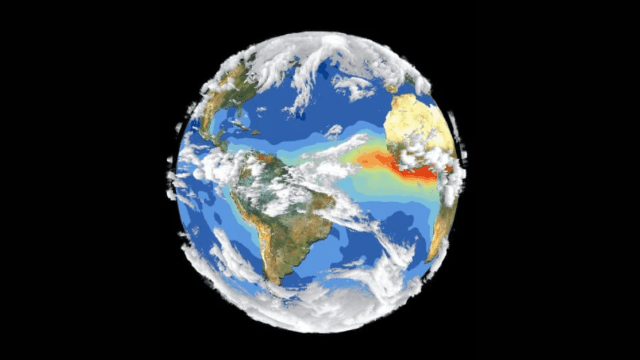
- Net Zero Emissions
Essentially, this is the same as above, where the CO2 we put into the environment equals the amount we take out
- Renewable Energy
Energy that comes from a source that we can use again and again. These include,
Solar energy (from the sun)
Hydroelectric energy (from water)
Advanced collocations
A collocation is where two or more words usually go together; a bit like best friends.
You can extend your climate change vocabulary by using the following collocations when talking on this topic.
The following collocations use different adjectives meaning ‘big’
- An insurmountable challenge
- A serious impact
- An urgent need
- A drastic change
Here are some examples with these collocations.
Reducing Global Warming is not an insurmountable challenge
Deforestation is having a serious impact on Climate Change
There is an urgent need to take drastic action to reduce global warming
The following collocation uses an adjectives meaning ‘easy’
- A straightforward solution
There is no straightforward solution to climate change
Useful verbs
Here are some useful verbs, and the words they collate with, that we commonly use to talk about Climate Change.
1) To ______ a target
- To reach a target
There is an urgent need to reach the 1.5 target!
We can also say,
- hit a target
- attain a target
- achieve a target
2) To _________ solutions
- To implement solutions
We can also say,
- To put into place solutions
3) To ________ sustainable
- To become sustainable
4) To ________ emissions
- To reduce emissions
We can also say,
To lower emissions
To cut back on emissions
To offset emissions
Phrasal verbs
Phrasal verbs are verbs that take an adverbial particle of a preposition (such as, in, on, out, under, away, from…). The meaning is often idiomatic and so cannot be seen clearly from the verb and preposition.
Phrasal verbs are used in natural conversation a lot and so are a great way to expand your climate change vocabulary.
Here are some common ones that are used to discuss this topic.
- To cut down on coal = to reduce
- To cut back on (using) coal = to reduce
- To phase out our use of carbon = to reduce slowly
- To give up our way of life = to stop doing/having it
Here are some examples with these verbs.
If we are going to be carbon neutral by 2030, we need to cut down on our use of coal immediately
There is an urgent need to cut back on our use of fossil fuels. Slowly phasing them out in not enough, we must do it now.
We need to give up our excessive use of coal, water and fossil fuels.
Idiomatic expressions about climate change
The following idiomatic expressions are often used when talking about Climate Change.
- To do your bit = to make a contribution
- To play your part = to make a contribution
You can do your bit by eating less meat
You can play your part by turning off the lights when you leave a room
- To kick the can down the road = to delay making a difficult decision
- To grapple with an issue/problem/difficulty = to try hard to solve it
Governments are grappling with this issue of climate change
- To face a problem head on = to deal with a problem directly
- To put our heads in the sand = ignore (a problem)
- To make a dent in a problem = to make a small impact
If we don’t make some radical changes in how we source energy, we won’t even make a dent in this problem.
If you liked this lesson, leave a comment below, and tell us what you think about Climate Change.
Frequently Asked Questions
Incorporate essential terms like Climate Change, CO₂, Carbon Emissions, Carbon Footprint, Carbon Neutral, Net Zero Emissions, and Renewable Energy (e.g., solar, hydroelectric, wind, geothermal) to clearly express ideas about environmental topics.
Try collocations that add richness and natural flow, such as: an insurmountable challenge, a serious impact, an urgent need, a drastic change, and a straightforward solution. These combinations help demonstrate a nuanced command of vocabulary.
- Useful verbs include: reach/hit/attain/achieve a target, implement (or put into place) solutions, become sustainable, and reduce/lower/cut back on/offset emissions.
- Common phrasal verbs: cut down on coal, cut back on fossil fuels, phase out our use of carbon, give up our way of life. These verbs offer dynamic and precise expression.
Yes! Try natural idioms like: do your bit, play your part, kick the can down the road, grapple with an issue, face a problem head-on, put our heads in the sand, and make a dent in a problem. These phrases make your responses sound more conversational and engaging.
Improve your Speaking Skills with this Free Course
Crack IELTS Speaking Part 1
Learn to Speak with Confidence in Part 1 of Your IELTS Test!
⭐️⭐️⭐️⭐️⭐️
‘It’s such a great course. I’ve learned so many usages for speaking part 1.’
Zu Htet





9 thoughts on “Vocabulary to Talk about Climate Change”
Great post!
It’s so important to have the right vocabulary when discussing climate change. Words like ‘carbon footprint’, ‘sustainability’, and ‘greenhouse gases’ help us communicate the urgency and impact of the issue.
Thanks for breaking it down so clearly!
Pingback: How to talk about CLIMATE CHANGE in English – NetzeroBullet.in
Beplaukis
when I press the icon to participate in the course, a message is shown to me and says “Access Denied”
actually, I live in Iran, so what should I do?
Thanks for your important help. I appreciate it
My pleasure
Thank you so much! This will be extremely helpful.
Pleased to hear that!
This’s good website.