Student Overview
- Starting level: Band 6.5
- Target: Band 7.5
- Biggest challenge: Overthinking while speaking, lack of consistent speaking practice, and balancing study/work commitments
- What helped most: Structured practice from the Gold Course, imitation of model answers, recording and analysing his own speaking, and better time management
- Result: Band 7.5 in IELTS Speaking
Watch Jason share his experience in his own words:
The Story
The Problem
Before preparing seriously, Jason often struggled with speaking fluently under pressure. He tended to overthink while speaking, which affected his fluency. He also had a very busy schedule due to his medical studies and career plans, which made it difficult to consistently practice speaking.
What Wasn’t Working
Jason had tried preparing in different ways, but without a structured system, his practice wasn’t consistent enough. He realised that simply trying to “think more carefully” while speaking actually made things worse, as it reduced his fluency and natural flow.
What Changed
Everything changed when Jason started using a more structured approach through the IELTS Speaking Success Gold Course. He focused on:
- Repeating and imitating model answers
- Practising pronunciation by copying native-like speech
- Recording his own speaking and listening back to identify mistakes
- Speaking more naturally instead of overthinking
- Managing his time better by cutting out unnecessary activities
He also realised that improvement comes from consistency rather than intensity.

The Result
After consistent practice, Jason improved his IELTS Speaking score from Band 6.5 to Band 7.5.
He also achieved strong overall results in his exam:
- Listening: 8.5
- Reading: 7
- Writing: 7
More importantly, he became significantly more confident in expressing himself naturally in English.
Useful English from this story
- “It’s a matter of time” → improvement happens with consistent practice
- “Put in the effort” → to work hard consistently
- “Overthinking will kill fluency” → thinking too much reduces speaking performance
- “Go with the flow” → speak naturally without forcing ideas
- “Manage my time wisely” → organise time effectively for practice
- “Remove unnecessary things” → eliminate distractions to focus on priorities
What you can learn from Jason
- Speaking improvement comes from structured, regular practice, not memorisation
- Confidence improves when you speak more and analyse your own mistakes
- Overthinking is one of the biggest barriers to fluency
- Simple, natural English is more effective than complex, forced language
- Time management is key when preparing alongside work or studies

Speaker 1:
I’m excited to share an interview with you where one of my students tells you how she got a Band 8 in IELTS Speaking. Hello, it’s Keith from Keith Speaking Academy and the YouTube channel English Speaking Success, here to help you become a more confident speaker of English. I’m super excited today to share another IELTS Speaking success story. It’s one of my students called May. May is from Myanmar, although now she lives in Singapore. May first did the IELTS test in 2021 and got a 5.5. Then last year she joined the Gold Course, the Fluent Grammar Course, and the Idioms Course at Keith Speaking Academy. She also got Eli’s Writing Course and Fiona’s Reading Course. The interesting thing is she didn’t just join the courses—she completed most of them, which is a significant achievement. This year, she took the test again and got an 8 in IELTS Speaking. It’s an amazing story because May is also a nurse, balancing work with study. She’ll tell us about the challenges she faced, how she prepared for IELTS, how she used the online courses, and what she plans to do next. I hope her story inspires and motivates you to keep studying. Let’s jump in and find out more about May’s journey. Hello, May. Hi, how are you?
Speaker 2:
Hi. Hello, Keith. It’s nice to finally talk to you.
Speaker 1:
Same here. Great to meet you and chat with you. Thank you for coming here to talk to me. Maybe you could start by introducing yourself to everyone watching. Tell us where you’re from, what you do, and a little bit about yourself.
Speaker 2:
Yes. My name is May—just call me May. I’m from Myanmar, but I’m currently working in Singapore as a professional nurse.
Speaker 1:
And what job do you do there?
Speaker 2:
I’m working as a nurse in one of the community hospitals.
Speaker 1:
Fantastic. Now, you’ve taken IELTS. Why did you decide to take it?
Speaker 2:
Well, first of all, I like to travel and gain new experiences. Mostly, it’s for my career development. In order to do that, I need to take an English language test, so I took IELTS.
Speaker 1:
Do you have plans to get a new job or maybe move somewhere in the future?
Speaker 2:
Yes. I plan to move because I enjoy being close to nature. In Singapore, it’s difficult because of the population and the environment. I want to move somewhere where I can be closer to nature, have adventures, and enjoy that kind of lifestyle.
Speaker 1:
Singapore is a very small kind of concrete jungle, right? As nice as it is, it’s quite small.
Speaker 2:
Yes, that’s true.
Speaker 1:
You took the test recently, either in April or May. Tell everyone what score you got.
Speaker 2:
Yes, I took IELTS in April and I got Band 8 in Speaking.
Speaker 1:
Wow. Congratulations. Well done.
Speaker 2:
Thank you. It’s all thanks to you. I can’t thank you enough.
Speaker 1:
I think I only played a small role. I’m sure it was mostly your hard work. Going back a bit, you started preparing about a year ago. What kind of challenges were you facing while preparing?
Speaker 2:
Actually, this was my second attempt. The first time I took IELTS was in 2021 and I only got 5.5. At that time, I just wanted to experience what the test looked like because I didn’t really study for it. This time, I prepared seriously. I studied the patterns, the structure, and everything about the test. I put in effort for more than a year before taking it again.
Speaker 1:
When it came to IELTS Speaking specifically, were there any particular challenges for you?
Speaker 2:
Yes, definitely. During the test, my examiner looked very fierce. He stared at me directly and never smiled, so I became very nervous and anxious. I kept thinking maybe I was making mistakes. But I tried to calm myself down, and I followed your advice: don’t think of it as a test, think of it as communication. I just focused on communicating my ideas.
Speaker 1:
Yes, sometimes examiners can be very serious. Leading up to the exam, how did you prepare your speaking?
Speaker 2:
I prepared in every possible way. In Singapore, we use English a lot, but not really native-style English. I tried not to use slang or shortcuts. I tried to speak more formally. When I wasn’t practising during real-life conversations, I used speaking apps like ELSA Speak. Since my mother tongue is very different from English, it was difficult to change the way I speak. I had to train my mouth a lot. The app gave me feedback on my pronunciation and sounds. I also watched movies and repeated sentences that caught my attention. I read books and listened to podcasts—all in English.
Speaker 1:
That’s fantastic. You were surrounding yourself with English all the time. I remember you joined the Gold Course and the Fluent Grammar Course at Keith Speaking Academy. How did you work with those?
Speaker 2:
They helped me in many ways. The Gold Course helped me become familiar with the question types, so before the test I wasn’t so nervous because I knew what to expect. I learned how to answer naturally, like you teach us. If I didn’t know something, I would simply say I wasn’t familiar with the topic. The course added flavour and colour to my speaking. It made conversations smoother and gave me confidence. We answered questions first, then compared our answers with the model answers, which was great practice for me.
Speaker 1:
Did you do any speaking practice on your own?
Speaker 2:
Yes, a lot. Especially for Part 2, where we have to speak for two minutes. I would record myself speaking for two minutes. Sometimes I could reach two minutes, sometimes not, but that was okay. Then I would listen back and notice grammar mistakes or vocabulary mistakes, and I would try to improve those next time.
Speaker 1:
An important part of IELTS Speaking is building vocabulary. What was your method?
Speaker 2:
Whenever I found words I didn’t know while reading books, I would write them down. I started with beginner books, even children’s books with pictures, to motivate myself. Later, I would study the pronunciation and meanings. I tried to learn about ten new words a day.
Speaker 1:
You mentioned motivation. You’re also working as a nurse. How did you balance work and study?
Speaker 2:
Here we work morning shifts, afternoon shifts, and night shifts. After a morning shift, I would study for two or three hours. Before an afternoon shift, I would study first. On my days off, I could study for five or six hours. Even if I only had ten or fifteen minutes, I would still listen to a YouTube video or podcast on the way to work. I even practised speaking while commuting. If nobody was around, I would speak my thoughts out loud in English. Even in my mind, I tried to think in English instead of my mother tongue. If I couldn’t find an expression, I would search for it online.
Speaker 1:
That’s great. Even five minutes a day is better than nothing. Regular contact with English is so important. Now, for students watching who are beginning their IELTS journey, what advice would you give them?
Speaker 2:
First of all, I would repeat your advice: don’t think of IELTS as a test, think of it as communication. Secondly, don’t compare yourself with other people. Compare yourself with your past self. Look at where you were one or two years ago and compare it to now. That’s how you see progress. If you compare yourself with people getting Band 8 or 9, you’ll just feel depressed. But if you compare your past and present self, you’ll feel motivated.
Speaker 1:
That’s excellent advice. Compare yourself to yourself. By the way, is that a bird in the background?
Speaker 2:
It’s not a pet. I’m in a park built on top of a car park, so there are small birds around.
Speaker 1:
A little bird—great. If there’s one thing you wish you had known before starting IELTS, what would it be?
Speaker 2:
Honestly, there are many things. When I first moved to Singapore, my English was quite bad. I couldn’t even speak full sentences. I had to think carefully about subject, verb, object, and everything. Now I can at least hold conversations. I had to build everything: confidence, knowledge, vocabulary, expressions—everything. Learning expressions was especially important because some things from my mother tongue don’t translate directly into English. Learning those expressions made conversations more fun.
Speaker 1:
Excellent. So what’s next for you now?
Speaker 2:
I’m preparing to move to New Zealand. Hopefully everything goes well.
Speaker 1:
Why New Zealand?
Speaker 2:
I love nature, and I don’t really enjoy the hustle and bustle of city life. I’d rather live in a suburban or rural area, maybe have a farm or a garden. That’s why I chose New Zealand.
Speaker 1:
That sounds wonderful. I wish you lots of luck with that, and I hope everything goes smoothly for you. Congratulations again, and thank you so much for talking to us.
Speaker 2:
Thank you. Thank you very much.
Speaker 1:
Thank you, May. Take care. Bye-bye.
Speaker 2:
Bye-bye.
Speaker 1:
So there you have it. A big thank you to May for sharing her journey with all of us, and thank you to you for watching. I hope this story inspires and motivates you in your own studies. If you want to learn more about the courses May studied, there’s a link in the description below. Of course, there’s also the YouTube channel English Speaking Success with lots of free videos to help you. But if you want to take your learning deeper and become a truly confident English speaker, have a look at the courses and see if they’re right for you. I’d love to see you inside. In the meantime, remember to subscribe to the channel, and I look forward to seeing you in the next video. Take care now. All the best. Bye-bye.
FAQs
It depends on consistency, but many students can improve their overall speaking skills significantly in 3–8 months with regular, structured practice.
Yes, but you need a structured system, regular speaking practice, and self-review methods like recording yourself.
Focus on daily speaking practice and correcting your own mistakes through recording and review. Discovering new language through video model answers is a good technique, as this not only creates context, but also helps you grow more familiar with IELTS Speaking answer format, and the natural spoken English you need for IELTS.
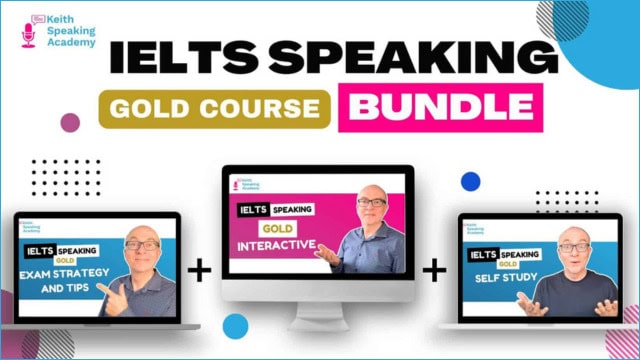
If you want to build your confidence in speaking like Jason, you can check out my course here:
More Student Success Stories
- Junjie’s Story – See how Junjie raised his IELTS Speaking score from Band 7.5 to Band 8 with daily practice, clear techniques, and stronger confidence during the test.
- Thu’s Story – Discover how Thu improved from Band 7 to Band 8 in IELTS Speaking by stepping out of her comfort zone, practising real conversations with native speakers, and learning to speak more naturally under pressure.