Student Overview
- Starting level: Band 4.5
- Target: Band 6.5+ (achieved Band 6.5 speaking, Band 7 overall)
- Biggest challenge: Very low speaking level, lack of fluency, timing issues in writing, and difficulty completing speaking practice
- What helped most: Consistent practice over time, Gold Course Speaking Success System, daily writing and speaking practice, and long-term commitment
- Result: Band 6.5 in IELTS Speaking (from Band 4.5) and Band 7 overall after around 1 year of study
The Story
The Problem
Before joining, Stefanus had a very low level of English (Band 4.5 in speaking). He was a beginner and struggled with fluency and accuracy. He felt pressure because he needed IELTS for a PhD scholarship abroad, and his score requirement was at least 6.5 overall. He was also under time pressure due to scholarship deadlines.
What Wasn’t Working
At the beginning, Stefanus tried to prepare quickly but did not fully commit to a structured system. He even took the IELTS test too early after only completing part of the course and failed. He got Band 4.5 in speaking and Band 5.5 overall. He also struggled with exam topics because he had not practiced them properly.
His biggest issues were:
- Lack of preparation time
- Limited practice of speaking topics
- Weak fluency and confidence
- Not following a full study system consistently
What Changed
After his setback, Stefanus changed his approach completely. He fully committed to structured learning and consistent practice.
He focused on:
- Completing the Gold Course fully
- Following the Speaking Success System
- Daily repetition of speaking practice
- Expanding vocabulary and fluency through structured lessons
- Practising exam-style questions regularly
- Staying consistent over months instead of rushing
The Result
After around 12 months of focused preparation, Stefanus improved significantly.
He achieved:
- Band 6.5 in IELTS Speaking
- Band 7 overall
He also gained much stronger fluency, confidence, and natural use of idiomatic expressions. He became a much more confident English speaker and successfully moved forward with his PhD plans in Australia.
Useful English from this story
- “racked my brain” → tried very hard to solve a problem
- “down in the dumps” → feeling sad or discouraged
- “second to none” → the best
- “On top of the world” → feeling very happy
- “grafted” → worked very hard (informal British English)
- “tickled pink” → very pleased or happy
What you can learn from Stefanus
- Consistency beats intensity (daily practice matters more than cramming)
- Focus on improving your overall spoken English before thinking about test preparation techniques
- Making mistakes is part of the learning process
- Long-term commitment leads to real improvement
- Speaking confidence grows through repetition and exposure

Speaker 1
How do you go from a 4.5 to a 6.5? What’s the magic? Let’s find out! Hello there, it’s Keith from English Speaking Success and the website The Keith Speaking Academy. This is a very special video for me because it’s an interview with a student of mine, Stefanus, from Indonesia, who I met about 2 years ago when he first joined the Keith Speaking Academy. Shortly after joining, he decided to do the IELTS test and got a 4.5 in speaking, which reflected his real level at the time. He was a beginner, and what impressed me most was his dedication. He kept studying over a period of more than a year, and recently he improved from 4.5 to 6.5 in speaking and 7 overall. It’s an amazing result.
To be honest, this is what my job is all about—seeing students succeed after working so hard. He is now applying for his PhD in Australia, which makes me very happy for him. I invited him to share his journey, the challenges he faced, how he studied, and advice for other students in a similar situation. I think it will be a great inspiration. As you listen, notice not only his English but also his use of idiomatic language, which is really impressive.
Let’s jump straight in. Hi, Stefanus. How are you?
Speaker 2
Hi, Keith. I’m great, top of the world. And how are you?
Speaker 1
Yeah, I’m good. Very pleased to see you. Congratulations again on your IELTS result. Before we start, tell us a bit about yourself—where you’re from and what you do.
Speaker 2
I’m from Indonesia, and I live in a small town called Kupang, which is the capital city of East Nusa Tenggara province. This province is famous for Komodo dragons and beaches.
Speaker 1
Great. And are you working or studying?
Speaker 2
I work as a lecturer at a health institution in Kupang. I teach students and give classes every day.
Speaker 1
Interesting. Why did you take IELTS?
Speaker 2
I have a scholarship from the Indonesia Endowment Fund for Education to study a PhD abroad. I’ve had it for about 15 months, but I was worried because I didn’t have an IELTS score. Most universities require at least 6.5 overall. So I was really trying hard to achieve that score.
Speaker 1
What was your solution?
Speaker 2
There is no magic. A friend told me your course is second to none. So after watching your YouTube videos, I joined your course to solve my problem.
Speaker 1
Thank you. What challenges did you face while learning English and preparing for IELTS?
Speaker 2
The biggest challenge was pressure. I was worried my scholarship would expire if I didn’t get 6.5 in time. I also had no clear idea at first. I made a mistake early on—I only completed about 20% of your course and then took the test. I got 4.5 in speaking and 5.5 overall, so I failed.
I felt really disappointed, but I realised my level was basic. The frustrating thing is that many questions in the test came directly from your Gold Course topics, like food, staying up late, and advertisements. I hadn’t practiced them properly, so I failed. After that, I decided to fully focus on your course.
Speaker 1
You’ve made amazing progress in 15 months from 4.5 to 6.5. Well done. How did the Gold Course help you?
Speaker 2
First of all, thank you. What I like most is the lifetime access and wide range of topics. I followed your Speaking Success System—try, discover, practice, and build. I repeated this many times.
It helped me improve vocabulary, fluency, and confidence. I also learned useful expressions like “when you were a kid growing up” from your lessons. I practiced daily, and after 5 months of preparation, I finally got Band 7 overall. I was really happy and surprised.
Speaker 1
Your progress is incredible. Your speaking now is very different from before. What’s next for you?
Speaker 2
Now I am applying for a PhD in Australia, in community nursing. I hope to finish my studies and improve my career as a lecturer. I also want to contribute to reducing non-communicable diseases among older adults.
Speaker 1
That’s fantastic. What advice would you give to IELTS students?
Speaker 2
Be persistent. There is no magic. Make a schedule and stick to it. For example, reading and listening in the morning, speaking and writing in the afternoon.
Improve your general English first—vocabulary, pronunciation, grammar. Then follow teacher guidance and practice regularly. Do mock tests before the exam. Also, manage nerves with meditation and deep breathing.
Finally, I also believe spirituality and prayer help. For me, it gave strength and confidence.
Speaker 1
Great advice. How did you stay motivated?
Speaker 2
I studied almost 10 hours a day because of my scholarship pressure. But every Sunday, I relaxed with my family and children. That helped me recharge.
Speaker 1
Family support is very important. Thank you for sharing your journey. It will definitely inspire many students.
Speaker 2
Thank you so much for inviting me. It’s a great opportunity to share my experience.
Speaker 1
Thank you, Stefanus. We’ll stay in touch. Good luck with your PhD in Australia.
Speaker 2
Thank you very much.
Speaker 1 (closing)
Thank you for watching. I hope this was inspirational. If you’re interested in the courses Stefanus took, check the links below. Keep going, stay focused, and I’ll see you in the next video. Take care.
FAQs
It depends, but many students improve in 6–12 months with consistent practice.
Yes, if you are an independent learner. However, some students preferr guided learning and in this case, a structured system with practice and feedback make improvement faster.
The first thing to do is focus on improving your overall level of spoken English. Aim to follow a structured system that will lead to marked improvement over time. Next, start getting familiar the test format and question format. Practice lots so you can also develop your exam technique.
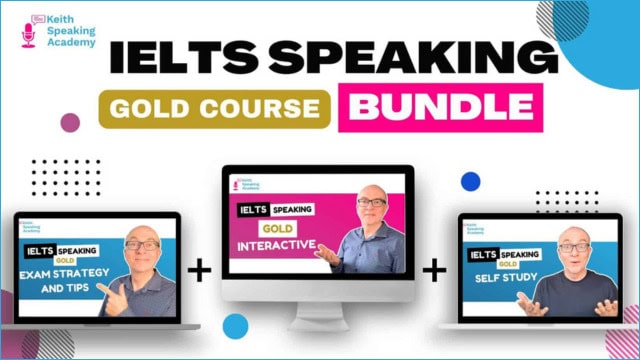
If you want to build your confidence in speaking like Stefanus, you can check out my course here:
More Student Success Stories
- Flavia’s Story – Learn how Flavia improved her IELTS Speaking score from Band 6 to 7.5 by building confidence, practicing consistently, and developing more natural speaking skills.
- Olena’s Story – Discover how Olena achieved Band 8.5 in IELTS Speaking through flexible strategies, real practice, and learning how to answer naturally without memorising responses.