Student Overview
- Starting level: Struggled with IELTS Speaking confidence and consistency
- Target: Band 7.5 in IELTS Speaking and Writing
- Biggest challenge: Identifying weaknesses in speaking and writing, lack of confidence, stress during exams, and maintaining motivation during long-term preparation
- What helped most: Repetition through the Fluent Grammar and Gold Courses, learning English in chunks, practising with AI tools like ChatGPT and Gemini, listening to idioms podcasts, and consistent speaking practice
- Result: Band 7.5 in IELTS Speaking and Band 7.5 in Writing while preparing for UK medical exams
Watch Stephen share his experience in his own words:
The Story
The Problem
Stephen, originally from Myanmar and living in Thailand while preparing for IELTS, needed strong English scores in order to continue his medical career abroad. He planned to work as a doctor in the UK, which required passing both IELTS and future medical licensing exams.
Although he was already relatively strong in listening and reading, he struggled with speaking and writing because he found it difficult to identify his weaknesses. Unlike listening and reading, speaking and writing do not provide instant feedback, which made improvement much harder.
He also faced the stress and pressure that many IELTS students experience, especially after preparing for several years.
What Wasn’t Working
Before finding a structured system, Stephen mainly focused on learning vocabulary and grammar rules in isolation. He realised this approach did not help him become a natural speaker.
He also found that constantly switching between teachers and learning methods created confusion and slowed his progress. Stress and sleep deprivation before exams also negatively affected his speaking performance.
What Changed
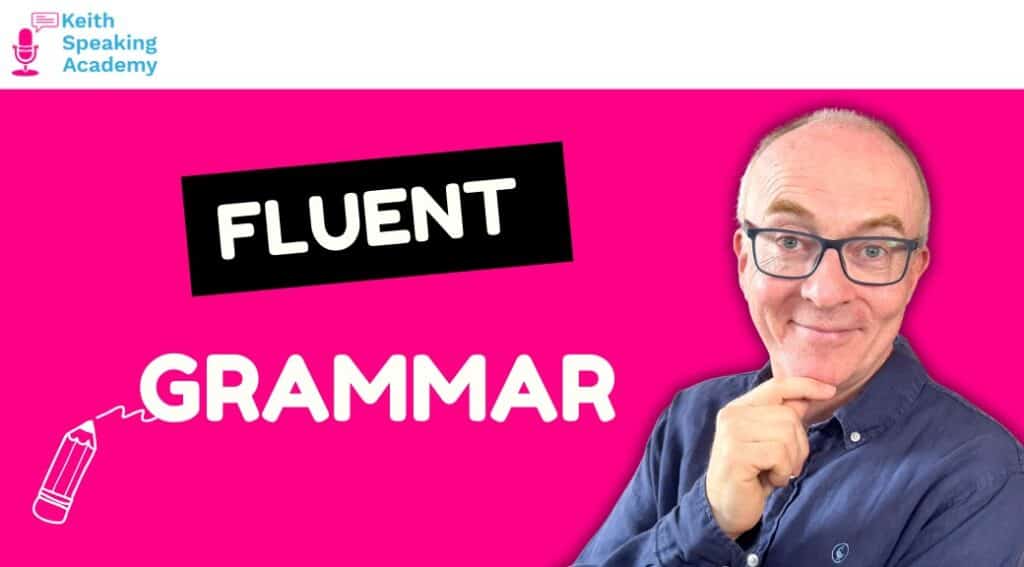
Everything changed when Stephen discovered the Fluent Grammar Course and later joined the IELTS Speaking Success Gold Course.
He focused on:
- Repeating the course lessons more than 10 times
- Listening and speaking along with model answers
- Learning English in “chunks” instead of individual words
- Using idioms naturally through repeated listening practice
- Using AI tools like ChatGPT and Gemini to explore natural English expressions
- Relaxing more and treating the examiner like a friend
- Building English into his daily habits through movies, podcasts, and speaking practice
- Improving consistency instead of chasing perfection
Stephen also realised that becoming fluent required developing automatic speaking habits rather than overthinking grammar or vocabulary.

The Result
After years of persistence and focused practice, Stephen achieved:
- IELTS Speaking: Band 7.5
- IELTS Writing: Band 7.5
More importantly, he became significantly more confident and natural when speaking English. He is now preparing for the next stage of his UK medical exams and moving one step closer to working as a doctor abroad.
Useful English from this story
- “To learn chunks” → learn groups of words together naturally
- “A creature of habit” → someone who develops consistent daily routines
- “To stick with one teacher” →to stay consistent with one teacher and learning system
- “Sleep deprivation” → lack of sleep that affects performance
- “To go step by step” → to progress gradually and consistently

Speaker 1:
I’m excited to share an interview with you where one of my students tells you how she got a Band 8 in IELTS Speaking. Hello, it’s Keith from Keith Speaking Academy and the YouTube channel English Speaking Success, here to help you become a more confident speaker of English. I’m super excited today to share another IELTS Speaking success story. It’s one of my students called May. May is from Myanmar, although now she lives in Singapore. May first did the IELTS test in 2021 and got a 5.5. Then last year she joined the Gold Course, the Fluent Grammar Course, and the Idioms Course at Keith Speaking Academy. She also got Eli’s Writing Course and Fiona’s Reading Course. The interesting thing is she didn’t just join the courses—she completed most of them, which is a significant achievement. This year, she took the test again and got an 8 in IELTS Speaking. It’s an amazing story because May is also a nurse, balancing work with study. She’ll tell us about the challenges she faced, how she prepared for IELTS, how she used the online courses, and what she plans to do next. I hope her story inspires and motivates you to keep studying. Let’s jump in and find out more about May’s journey. Hello, May. Hi, how are you?
Speaker 2:
Hi. Hello, Keith. It’s nice to finally talk to you.
Speaker 1:
Same here. Great to meet you and chat with you. Thank you for coming here to talk to me. Maybe you could start by introducing yourself to everyone watching. Tell us where you’re from, what you do, and a little bit about yourself.
Speaker 2:
Yes. My name is May—just call me May. I’m from Myanmar, but I’m currently working in Singapore as a professional nurse.
Speaker 1:
And what job do you do there?
Speaker 2:
I’m working as a nurse in one of the community hospitals.
Speaker 1:
Fantastic. Now, you’ve taken IELTS. Why did you decide to take it?
Speaker 2:
Well, first of all, I like to travel and gain new experiences. Mostly, it’s for my career development. In order to do that, I need to take an English language test, so I took IELTS.
Speaker 1:
Do you have plans to get a new job or maybe move somewhere in the future?
Speaker 2:
Yes. I plan to move because I enjoy being close to nature. In Singapore, it’s difficult because of the population and the environment. I want to move somewhere where I can be closer to nature, have adventures, and enjoy that kind of lifestyle.
Speaker 1:
Singapore is a very small kind of concrete jungle, right? As nice as it is, it’s quite small.
Speaker 2:
Yes, that’s true.
Speaker 1:
You took the test recently, either in April or May. Tell everyone what score you got.
Speaker 2:
Yes, I took IELTS in April and I got Band 8 in Speaking.
Speaker 1:
Wow. Congratulations. Well done.
Speaker 2:
Thank you. It’s all thanks to you. I can’t thank you enough.
Speaker 1:
I think I only played a small role. I’m sure it was mostly your hard work. Going back a bit, you started preparing about a year ago. What kind of challenges were you facing while preparing?
Speaker 2:
Actually, this was my second attempt. The first time I took IELTS was in 2021 and I only got 5.5. At that time, I just wanted to experience what the test looked like because I didn’t really study for it. This time, I prepared seriously. I studied the patterns, the structure, and everything about the test. I put in effort for more than a year before taking it again.
Speaker 1:
When it came to IELTS Speaking specifically, were there any particular challenges for you?
Speaker 2:
Yes, definitely. During the test, my examiner looked very fierce. He stared at me directly and never smiled, so I became very nervous and anxious. I kept thinking maybe I was making mistakes. But I tried to calm myself down, and I followed your advice: don’t think of it as a test, think of it as communication. I just focused on communicating my ideas.
Speaker 1:
Yes, sometimes examiners can be very serious. Leading up to the exam, how did you prepare your speaking?
Speaker 2:
I prepared in every possible way. In Singapore, we use English a lot, but not really native-style English. I tried not to use slang or shortcuts. I tried to speak more formally. When I wasn’t practising during real-life conversations, I used speaking apps like ELSA Speak. Since my mother tongue is very different from English, it was difficult to change the way I speak. I had to train my mouth a lot. The app gave me feedback on my pronunciation and sounds. I also watched movies and repeated sentences that caught my attention. I read books and listened to podcasts—all in English.
Speaker 1:
That’s fantastic. You were surrounding yourself with English all the time. I remember you joined the Gold Course and the Fluent Grammar Course at Keith Speaking Academy. How did you work with those?
Speaker 2:
They helped me in many ways. The Gold Course helped me become familiar with the question types, so before the test I wasn’t so nervous because I knew what to expect. I learned how to answer naturally, like you teach us. If I didn’t know something, I would simply say I wasn’t familiar with the topic. The course added flavour and colour to my speaking. It made conversations smoother and gave me confidence. We answered questions first, then compared our answers with the model answers, which was great practice for me.
Speaker 1:
Did you do any speaking practice on your own?
Speaker 2:
Yes, a lot. Especially for Part 2, where we have to speak for two minutes. I would record myself speaking for two minutes. Sometimes I could reach two minutes, sometimes not, but that was okay. Then I would listen back and notice grammar mistakes or vocabulary mistakes, and I would try to improve those next time.
Speaker 1:
An important part of IELTS Speaking is building vocabulary. What was your method?
Speaker 2:
Whenever I found words I didn’t know while reading books, I would write them down. I started with beginner books, even children’s books with pictures, to motivate myself. Later, I would study the pronunciation and meanings. I tried to learn about ten new words a day.
Speaker 1:
You mentioned motivation. You’re also working as a nurse. How did you balance work and study?
Speaker 2:
Here we work morning shifts, afternoon shifts, and night shifts. After a morning shift, I would study for two or three hours. Before an afternoon shift, I would study first. On my days off, I could study for five or six hours. Even if I only had ten or fifteen minutes, I would still listen to a YouTube video or podcast on the way to work. I even practised speaking while commuting. If nobody was around, I would speak my thoughts out loud in English. Even in my mind, I tried to think in English instead of my mother tongue. If I couldn’t find an expression, I would search for it online.
Speaker 1:
That’s great. Even five minutes a day is better than nothing. Regular contact with English is so important. Now, for students watching who are beginning their IELTS journey, what advice would you give them?
Speaker 2:
First of all, I would repeat your advice: don’t think of IELTS as a test, think of it as communication. Secondly, don’t compare yourself with other people. Compare yourself with your past self. Look at where you were one or two years ago and compare it to now. That’s how you see progress. If you compare yourself with people getting Band 8 or 9, you’ll just feel depressed. But if you compare your past and present self, you’ll feel motivated.
Speaker 1:
That’s excellent advice. Compare yourself to yourself. By the way, is that a bird in the background?
Speaker 2:
It’s not a pet. I’m in a park built on top of a car park, so there are small birds around.
Speaker 1:
A little bird—great. If there’s one thing you wish you had known before starting IELTS, what would it be?
Speaker 2:
Honestly, there are many things. When I first moved to Singapore, my English was quite bad. I couldn’t even speak full sentences. I had to think carefully about subject, verb, object, and everything. Now I can at least hold conversations. I had to build everything: confidence, knowledge, vocabulary, expressions—everything. Learning expressions was especially important because some things from my mother tongue don’t translate directly into English. Learning those expressions made conversations more fun.
Speaker 1:
Excellent. So what’s next for you now?
Speaker 2:
I’m preparing to move to New Zealand. Hopefully everything goes well.
Speaker 1:
Why New Zealand?
Speaker 2:
I love nature, and I don’t really enjoy the hustle and bustle of city life. I’d rather live in a suburban or rural area, maybe have a farm or a garden. That’s why I chose New Zealand.
Speaker 1:
That sounds wonderful. I wish you lots of luck with that, and I hope everything goes smoothly for you. Congratulations again, and thank you so much for talking to us.
Speaker 2:
Thank you. Thank you very much.
Speaker 1:
Thank you, May. Take care. Bye-bye.
Speaker 2:
Bye-bye.
Speaker 1:
So there you have it. A big thank you to May for sharing her journey with all of us, and thank you to you for watching. I hope this story inspires and motivates you in your own studies. If you want to learn more about the courses May studied, there’s a link in the description below. Of course, there’s also the YouTube channel English Speaking Success with lots of free videos to help you. But if you want to take your learning deeper and become a truly confident English speaker, have a look at the courses and see if they’re right for you. I’d love to see you inside. In the meantime, remember to subscribe to the channel, and I look forward to seeing you in the next video. Take care now. All the best. Bye-bye.
FAQs
Repeating sounds, chunks and speaking exercises helps automate language patterns, improve fluency, and build confidence in your speaking ability.
Usually yes. Learning chunks helps you use words more correctly because the chunk will often contain the ‘grammar’ of the word (i.e. how it is used). It also builds fluency as you are not thinking slowly word by word.
Yes. AI tools like ChatGPT and Gemini can help students practise speaking, writing, and the use of natural English expressions. It can also give invaluable feedback if used correctly.
Very important. Relaxation, consistency, confidence, and avoiding overthinking can significantly improve speaking performance.
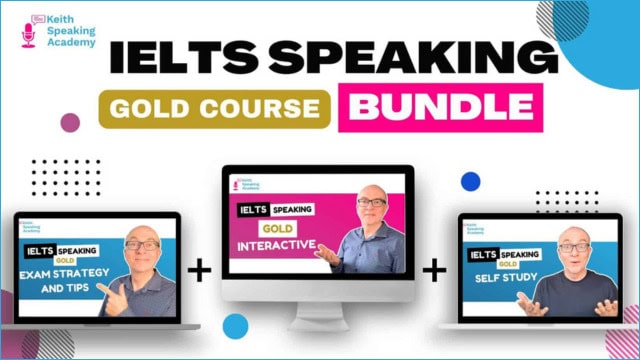
If you want to build your confidence in speaking like Stephen, you can check out my course here:
- Junjie’s Story – See how Junjie raised his IELTS Speaking score from Band 7.5 to Band 8 with daily practice, clear techniques, and stronger confidence during the test.
- Fennia’s Story – Discover how Fennia improved stepped out of her comfort zone to achieve band 8.5 in IELTS Speaking.